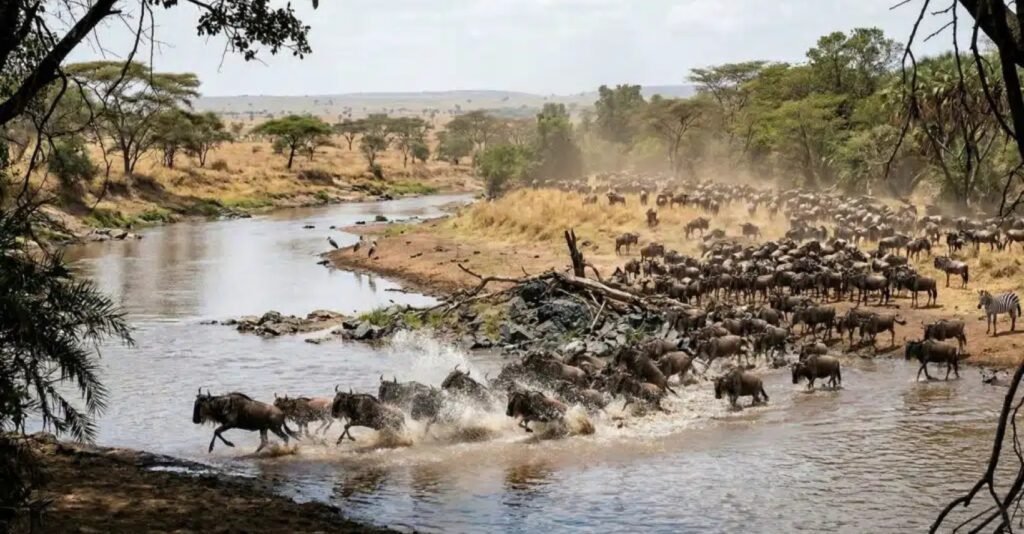
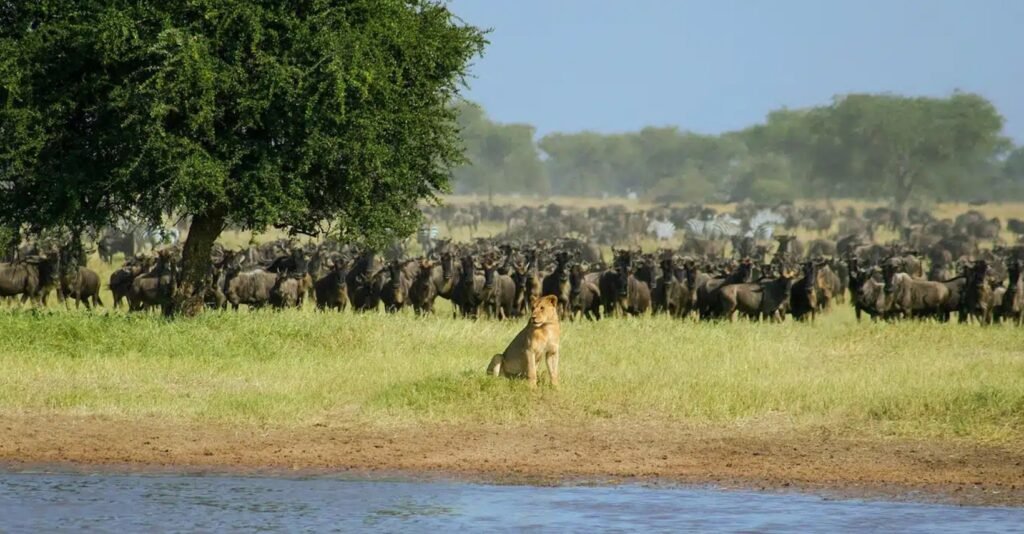
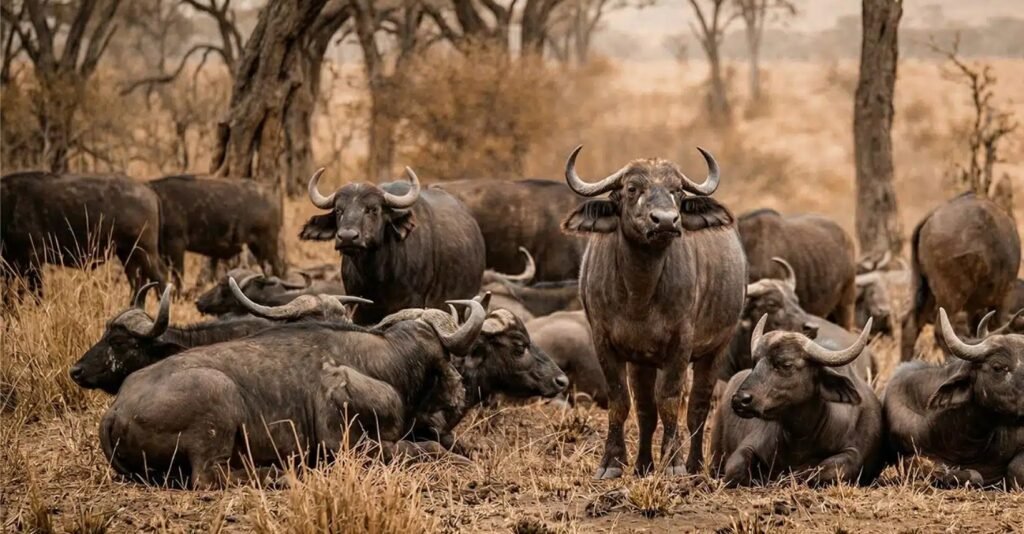
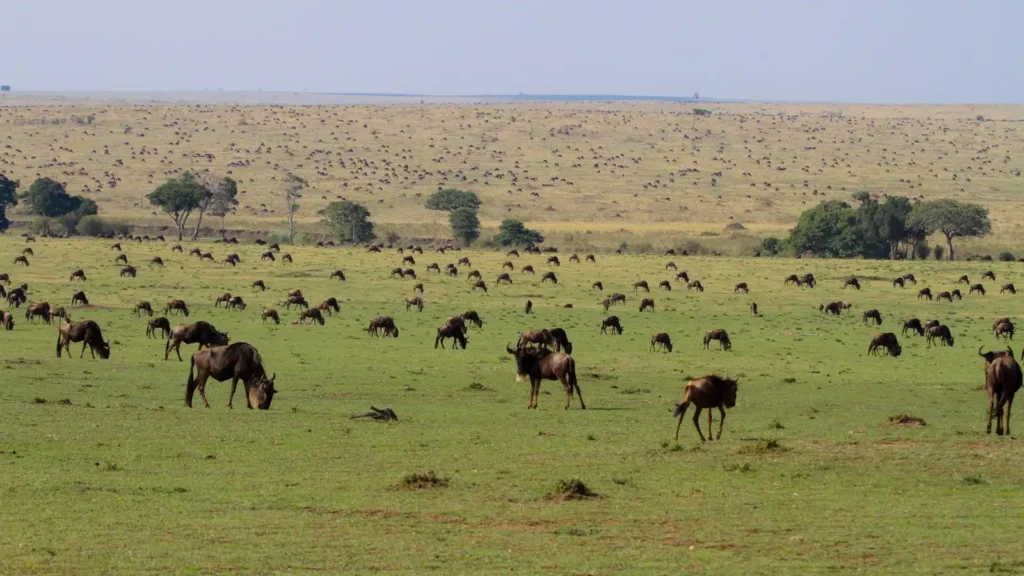
While the resident game is spectacular year-round, Seronera reaches a fever pitch during the Northward Migration (May–June) and the Southward Migration (November–December). During these windows, over a million wildebeest and zebra pour through the valley in a “thunder of echoing …
While the resident game is spectacular year-round, Seronera reaches a fever pitch during the Northward Migration (May–June) and the Southward Migration (November–December). During these windows, over a million wildebeest and zebra pour through the valley in a “thunder of echoing hooves and a haze of red dust.”
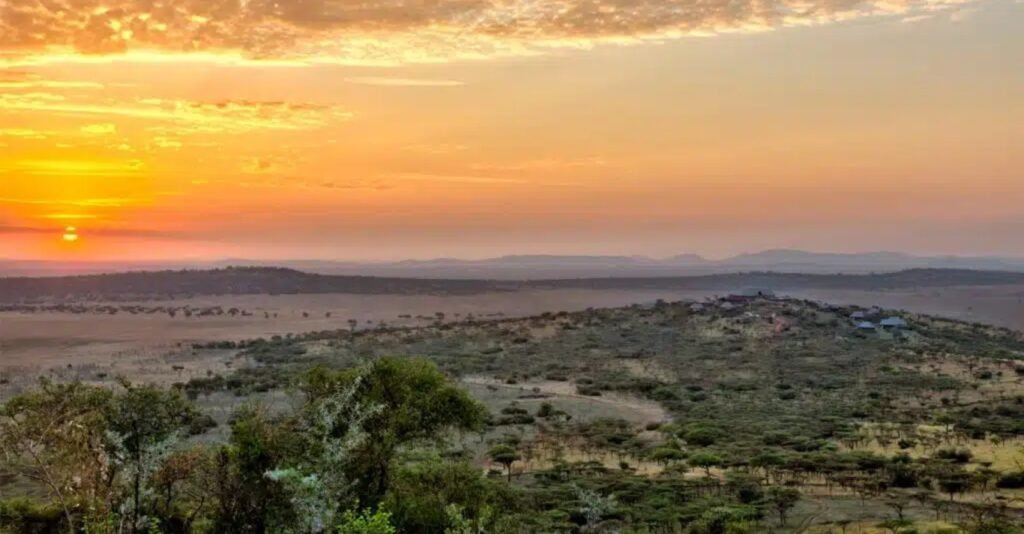
As Kay Turner, wife of the Serengeti’s first chief game warden, famously noted, there is a “quality of light” in Seronera that makes the landscape glow. Whether you are witnessing the “greatest wildlife show on earth” as the migration passes or observing the quiet, deadly stealth of a resident leopard in the off-season, Seronera never fails to deliver the most intense and authentic safari experience in Africa.
The landscape is defined by the Twin Hills (also known as the Naibardad Hills), which tower over the surrounding flats as a singular, wooded landmark. The plains themselves are classic short-grass savanna, characterized by volcanic-rich soil that keeps the grass short and highly mineralized. Unlike the woodland-adjacent regions, Matiti is exceptionally open, providing the “infinite horizon” look that defines the Serengeti. This openness is a strategic evolutionary choice; the lack of cover makes it difficult for predators to approach the birthing herds undetected.
Matiti is a seasonal powerhouse, with wildlife viewing peaking between January and March:
Month | Season | Weather | Wildlife Sightings | Rec. |
|---|---|---|---|---|
JAN | Green Season | 60 – 85 F
Mostly sunny with few showers | Wildebeest Migration and Zebra Migration, Lion, Cheetah, Elephant | Yes |
FEB | Green Season | 60 – 85 F
Mostly sunny with few showers | Wildebeest Migration and Zebra Migration, Lion, Cheetah, Elephant, Wildebeest Calving | Yes |
MAR | Green Season | 60 – 83 F
Mostly sunny with few showers | Wildebeest Migration and Zebra Migration, Lion, Cheetah, Elephant | Yes |
APR | Green Season | 60 – 83 F
Mostly sunny with few showers | Wildebeest Migration and Zebra Migration, Lion, Cheetah, Elephant | Yes |
MAY | Northward Migration | 56 – 81 F
Mostly sunny | Wildebeest Migration and Zebra Migration, Lion, Cheetah, Elephant | Yes |
JUN | Beginning of Dry Season | 56 – 81 F
Mostly sunny | Wildebeest Migration and Zebra Migration, Lion, Cheetah, Elephant (early June only) | Yes |
JUL | Dry Season | 60 – 83 F
Mostly sunny | —- | No |
AUG | Dry Season | 55 – 81 F
Mostly sunny | —- | No |
SEP | Dry Season | 55 – 81 F
Mostly sunny | —- | No |
OCT | Dry Season | 60 – 83 F
Mostly sunny | —- | No |
NOV | Southward Migration | 60 – 83 F
Mostly sunny with few showers | Giraffe, gazelle, Walking Safaris and Cultural Interactions | Yes |
DEC | Beginning of Green Season | 60 – 83 F
Mostly sunny with few showers | Wildebeest Migration and Zebra Migration, Lion, Cheetah, Elephant | Yes |
Vuma Hills Tented Camp Mikumi perches above the national park with sweeping views over
Villa Maua, meaning House of Flowers, sits right in the heart of Arusha, nestled
Nimali Central Serengeti sits in the heart of the Serengeti, near the iconic Makoma
We use cookies to personalise content and ads, to provide social media features and to analyse our traffic. We also share information about your use of our site with our social media, advertising and analytics partners who may combine it with other information that you’ve provided to them or that they’ve collected from your use of their services.
We also use cookies to collect data to personalize and measure the effectiveness of our ads. For more details, visit the Google Privacy Policy
By submitting your details, you agree that our team may contact you in accordance with our Privacy Policy and Terms & Conditions.