The Lobo Valley is a remote and pristine sanctuary in the northern reaches of the Serengeti. Characterized by spectacular granite kopjes, rolling hills, and open woodlands, it is a region of immense geological age—boasting rock formations estimated to be 2 …
The Lobo Valley is a remote and pristine sanctuary in the northern reaches of the Serengeti. Characterized by spectacular granite kopjes, rolling hills, and open woodlands, it is a region of immense geological age—boasting rock formations estimated to be 2 to 3 million years old. While much of the Serengeti parches during the dry season, Lobo remains a lush oasis thanks to permanent water sources like the Gaboti River and Lobo Springs.“Never have I seen anything like that game. It covered every hill, standing in the openings, strolling in and out among groves… as abundant one place as another.”— Stewart White, Explorer (1913)
The Predator Circuit: The Three Kings
Lobo is one of the few places in East Africa where you have a realistic chance of spotting all three large African cats in a single outing:
Migratory Cheetahs: While lions and leopards are permanent residents, cheetahs move into the valley during the dry season, following the migratory Thomson’s gazelle.
Topography: Ancient Stones and Pristine Vistas
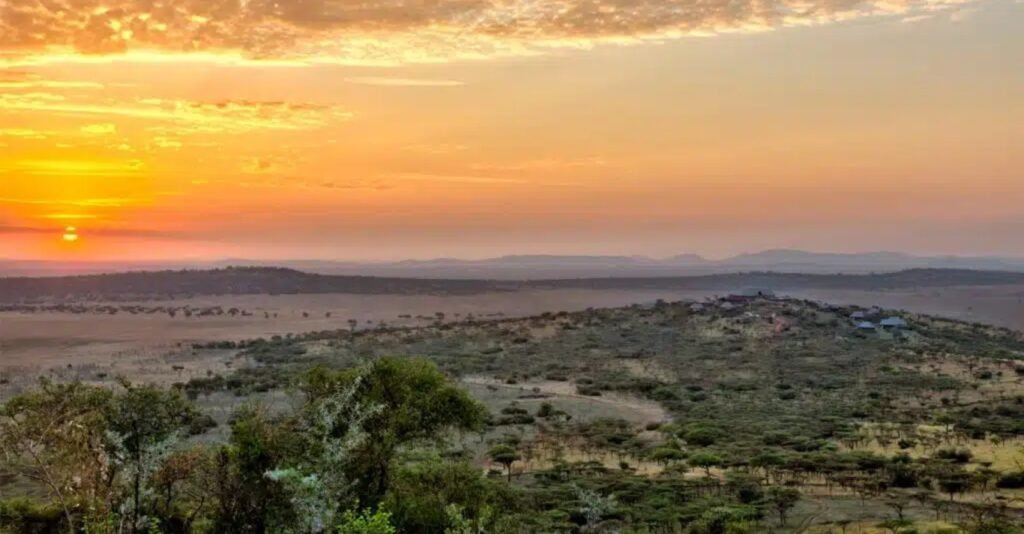
Lobo Valley is a remarkable mosaic of colorful patterns and diverse landscapes. The valley is scattered with open woodlands, vast plains, and rolling ranges of hills. The most striking features of this region are the spectacular granite kopjes that stud the valley floor. These massive rock formations are among the most ancient in the world, estimated to be between 2 and 3 million years old.
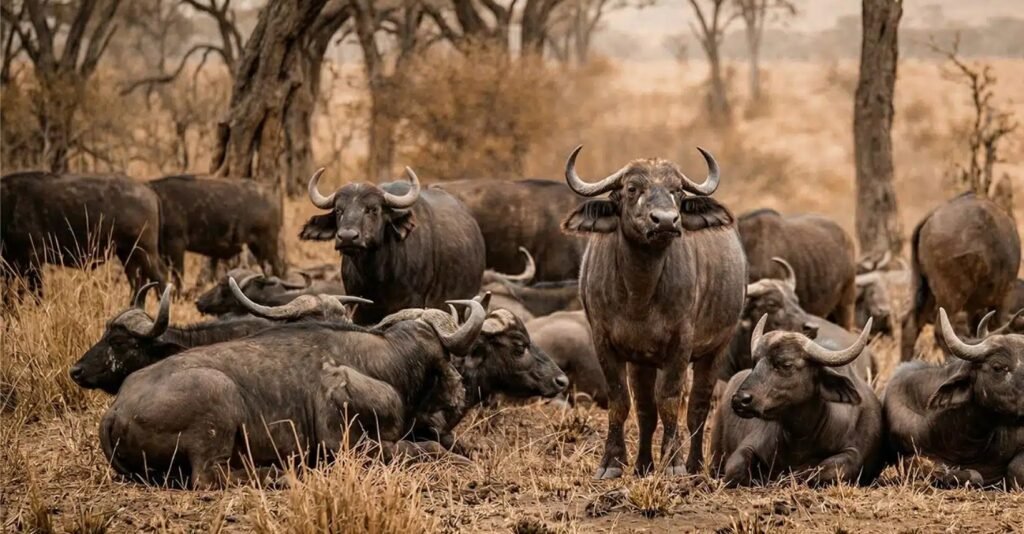
The dominant geographical feature is Lobo Hill, which flanks the eastern side of the valley. This varied topography—from the rugged hills to the shaded riverine areas—allows for an abundant and diverse population of resident herbivores. Because there are only two nearby lodges (Migration Camp and Lobo Lodge), the 90-square-mile valley never feels crowded, allowing for undisturbed game viewing and a sense of “golden solitude.”
The valley is studded with massive granite kopjes that serve as lookout points for predators and homes for specialized residents:
The Elephant Stronghold
Lobo Valley holds the largest remaining concentration of elephants in the Serengeti. In the 1990s, nearly 38% of the ecosystem’s elephants were found here. These populations have rebounded remarkably since the 1989 ivory ban, with over 2,000 elephants now calling the Serengeti home.
Unlike the wildebeest, elephants in Lobo follow a “reverse migration,” moving into the valley during the green season and dispersing during the dry months. They live in tightly-knit matriarchal groups where the oldest cow’s memory serves as the herd’s defense against drought.
The Fierce Bulls of the North
The elephants of the Northern Extension are noted for their formidable temperaments. Explorer Myles Turner captured their intensity in his 1966 writings:
“The Northern Extension of the Serengeti was the home of some of the fiercest elephants I have ever encountered… Why they are so evil tempered has never been satisfactorily explained. Whatever the reason, more often than not, they would charge at the slightest excuse, either singly or in a mass attack, screaming and trumpeting, a solid phalanx of living flesh bearing down in a cloud of dust.”
While “mock charges”—marked by head-shaking and ear-spreading—are common, the sight of a multi-ton giant bearing down in a cloud of dust remains one of the most adrenaline-pumping experiences in the valley.
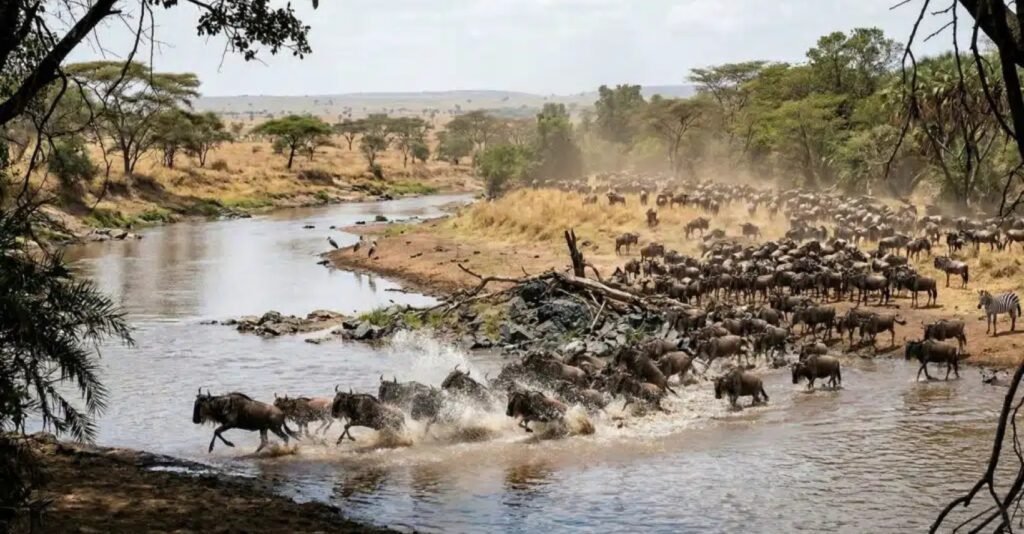
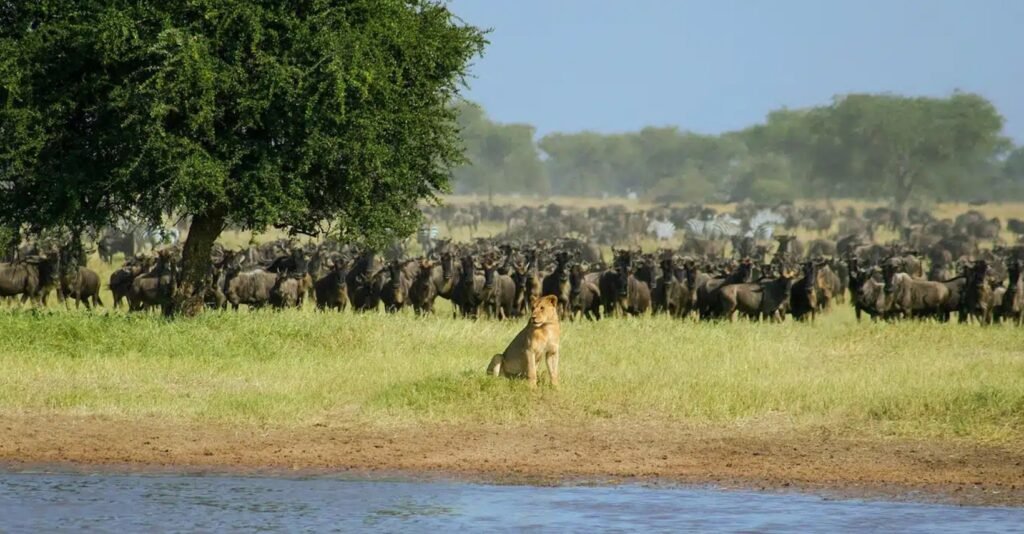
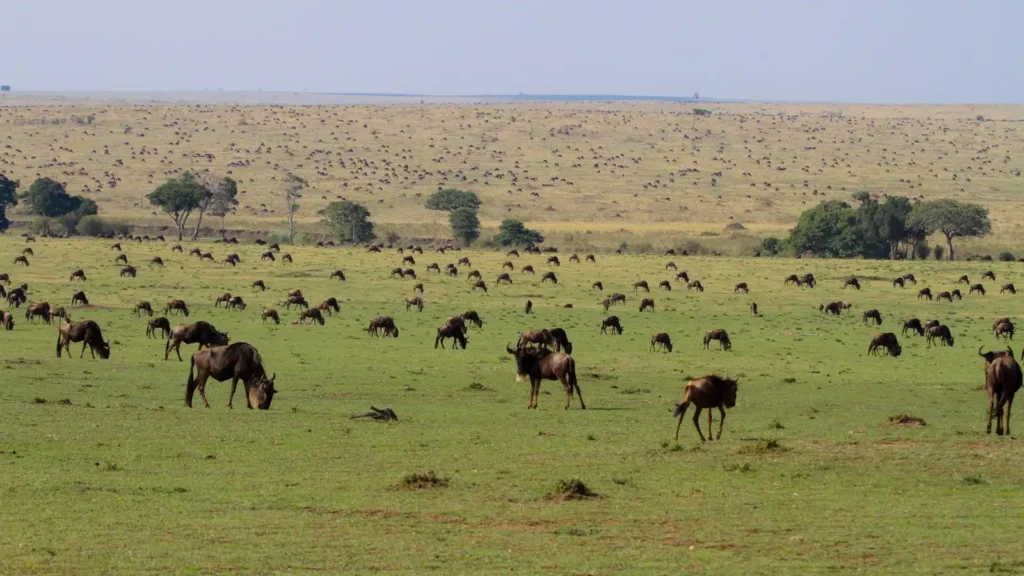
The Great MigrationThe legendary wildebeest migration thunders through Lobo twice a year: heading north in July/August and returning south from September to November. The southward journey is particularly dramatic, as the herds tend to linger in the valley’s rich pastures. An interesting local dynamic occurs when the migration arrives: the Lobo lion pride shifts its focus to the thundering herds, providing the resident buffalo and gazelle a brief, much-needed reprieve from predation.
Month | Season | Weather | Wildlife Sightings | Rec. |
|---|---|---|---|---|
JAN | Green Season | 60 – 85 F
Mostly sunny with few showers | —- | No |
FEB | Green Season | 60 – 85 F
Mostly sunny with few showers | —- | No |
MAR | Green Season | 60 – 83 F
Mostly sunny with few showers | —- | No |
APR | Green Season | 60 – 83 F
Mostly sunny with few showers | —- | No |
MAY | Northward Migration | 56 – 81 F
Mostly sunny | —- | No |
JUN | Beginning of Dry Season | 56 – 81 F
Mostly sunny | Wildebeest Migration, Zebra Migration, Lion, Elephant, Giraffe, Impala, Buffalo, Hippo | Yes |
JUL | Dry Season | 60 – 83 F
Mostly sunny | Wildebeest Migration, Zebra Migration, Lion, Elephant, Giraffe, Impala, Buffalo, Hippo | Yes |
AUG | Dry Season | 55 – 81 F
Mostly sunny | Wildebeest Migration, Zebra Migration, Lion, Elephant, Giraffe, Impala, Buffalo, Hippo | No |
SEP | Dry Season | 55 – 81 F
Mostly sunny | Wildebeest Migration, Zebra Migration, Lion, Elephant, Giraffe, Impala, Buffalo, Hippo | No |
OCT | Dry Season | 60 – 83 F
Mostly sunny | Wildebeest Migration, Zebra Migration, Lion, Elephant, Giraffe, Impala, Buffalo, Hippo | Yes |
NOV | Southward Migration | 60 – 83 F
Mostly sunny with few showers | Giraffe, gazelle, Walking Safaris and Cultural Interactions | Yes |
DEC | Beginning of Green Season | 60 – 83 F
Mostly sunny with few showers | —- | No |
Nimali Mara is a hidden oasis in a remote location in the northern part
Baobab Mara Luxury Camp is a premium safari camp in the northern Serengeti, strategically
Taasa Lodge sits perched above the endless plains of the Serengeti, offering you front-row
Singita Mara River Tented Camp sits in the northern Serengeti, offering a luxurious safari
Mara Mara Tented Lodge is a premium safari destination nestled in the heart of
Located near the Bologonja Ranger Post in Serengeti National Park, the Ang’ata Migration –
We use cookies to personalise content and ads, to provide social media features and to analyse our traffic. We also share information about your use of our site with our social media, advertising and analytics partners who may combine it with other information that you’ve provided to them or that they’ve collected from your use of their services.
We also use cookies to collect data to personalize and measure the effectiveness of our ads. For more details, visit the Google Privacy Policy
By submitting your details, you agree that our team may contact you in accordance with our Privacy Policy and Terms & Conditions.