
If you are planning a trip to East Africa, understanding food in Tanzania is essential before you arrive. Tanzanian cuisine brings together Swahili coastal traditions, Arab spice routes, Indian culinary influence, and the agricultural heritage of the African interior. Furthermore, every meal tells a story that stretches across centuries of trade and migration. The result is a cuisine that is layered, aromatic, and deeply satisfying — one that travelers rarely forget.
Tanzania sits at a remarkable geographic and cultural crossroads. Consequently, the mainland, Zanzibar, and the highland interior each carry their own distinct food identity. Along the coast, for example, you find coconut-laced curries and grilled fish perfumed with clove. Inland, however, hearty stews simmer over charcoal alongside the stiff porridge that anchors nearly every meal. In highland towns like Arusha and Moshi, meanwhile, market stalls overflow with fresh produce and meat roasts slowly over open flames.
Moreover, Tanzanian food is inseparable from hospitality. Sharing a meal here is an act of trust and welcome. Therefore, visitors who take the time to sit down and eat local food — at a roadside stall, a family-run restaurant, or a street market — are rewarded with flavors that no travel guide can fully capture. This article introduces you to ten essential traditional dishes, key street foods, vegetarian options, dining customs, and the best places to experience authentic Tanzanian food.
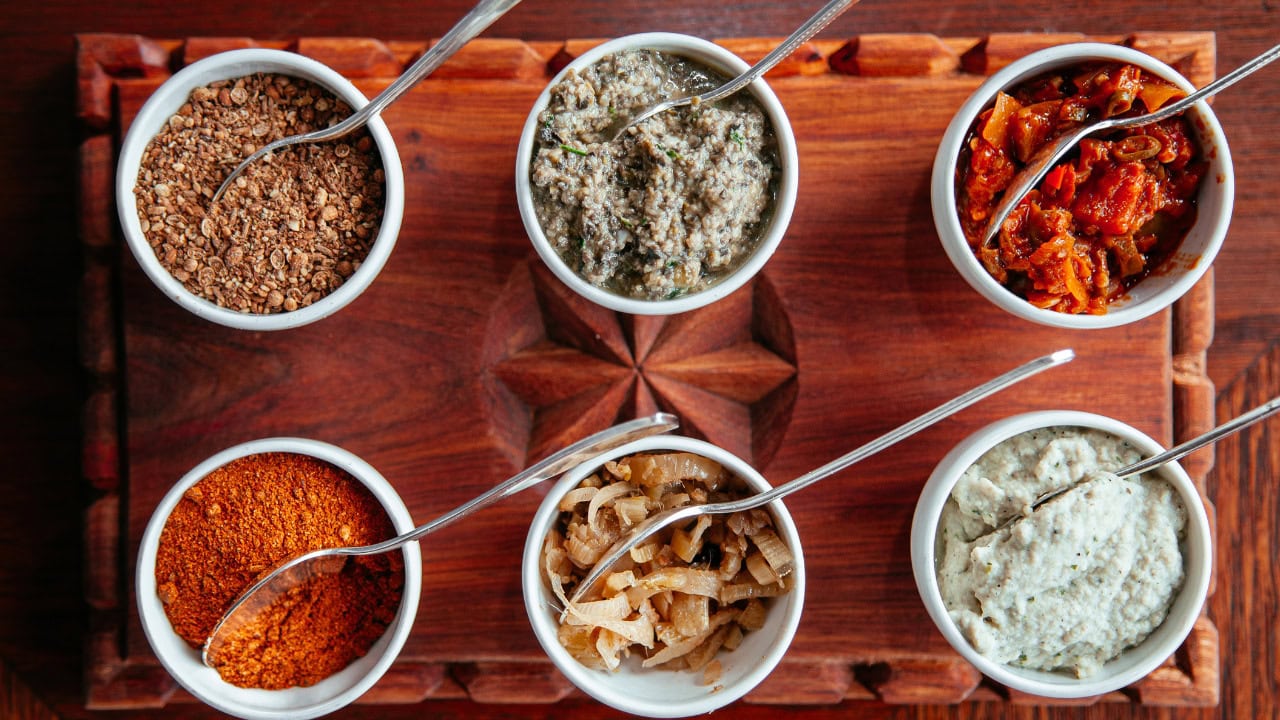
To understand traditional Tanzanian food, you first need to understand the country’s history. For centuries, the East African coast served as a hub for the Indian Ocean trade network. Arab merchants brought cloves, cinnamon, cardamom, and cumin. Indian traders, in addition, introduced curries, lentils, and flatbreads. Portuguese explorers left their mark on coastal cooking. As a result, all of these threads wove together into what we now call Swahili cuisine — a coastal culinary tradition that still defines large parts of Tanzania’s food culture today.
Move inland, however, and the influence shifts considerably. The Chagga people of Kilimanjaro, for instance, rely on cooking bananas as a staple crop. The Sukuma people of Mwanza are known for sukuma wiki, a braised kale dish that has spread across the entire country. Pastoralist communities like the Maasai, meanwhile, maintain food traditions rooted in meat, milk, and fermented products. Therefore, each ethnic group contributes something unique to the national table.
Beyond nutrition, food is central to Tanzanian daily life in ways that visitors often underestimate. Meals mark time, strengthen relationships, and signal respect. In rural areas, food production remains a community activity — extended families farm together and share harvests. In cities, the culture of eating out has grown rapidly. Nevertheless, the social nature of meals has not changed at all. Whether in a grandmother’s kitchen or a Dar es Salaam restaurant, eating in Tanzania is almost always a communal experience.
Here are ten popular foods in Tanzania that every visitor should experience at least once. Each dish reveals something essential about local food culture and the people who created it.
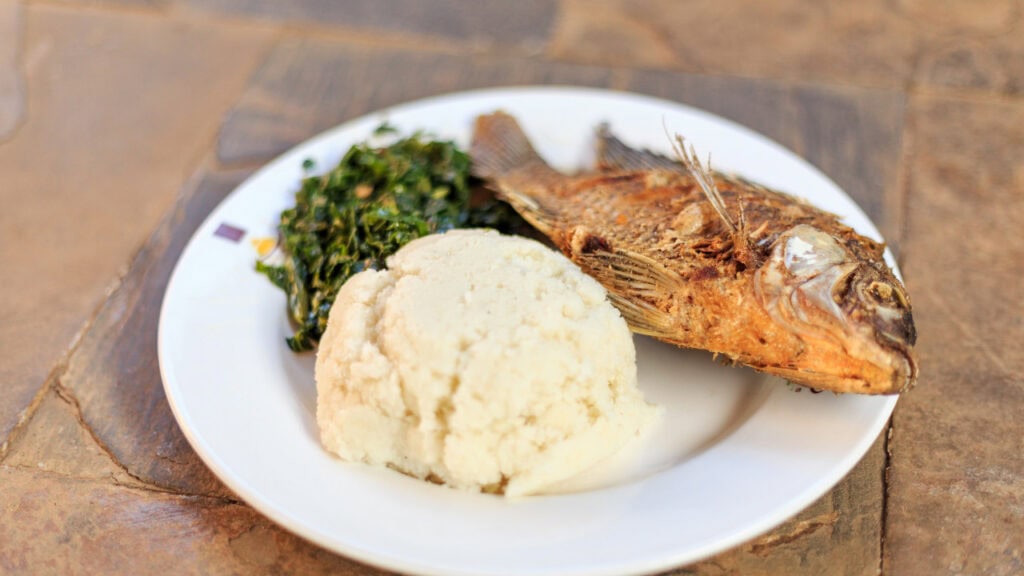
Ugali is the undisputed staple of traditional Tanzanian food — a stiff, smooth porridge made from white maize flour and water. Think of it as the bread, rice, and pasta of Tanzania rolled into one. It serves as the foundation of nearly every main meal across the country.
Ugali is intentionally mild and neutral. It is, in other words, the canvas on which the flavors of stews, greens, and grilled meats are displayed. Its dense, doughy texture is deeply satisfying — though it is hard to describe fully until you experience it yourself.
Culturally, ugali is not just food — it is identity. In Swahili, people say “chakula bila ugali si chakula” — food without ugali is not food. It crosses ethnic and regional lines, appearing on tables from the coast to the highlands. You will find it absolutely everywhere, from simple roadside hotelis to family homes across Tanzania.
Travel tip: Eat ugali with your right hand. Pinch off a small piece, roll it into a ball, press a small indentation with your thumb, and use it to scoop up stew or vegetables.
Nyama Choma — literally “burnt meat” in Swahili — is Tanzania’s beloved tradition of slow-grilling meat over charcoal. Goat and beef are the most popular choices, though chicken is widely available. Before grilling, cooks marinate the meat in lemon, salt, and occasionally chili.
The result is smoky, tender, and deeply savory. Moreover, it comes alongside kachumbari — a refreshing salad of tomatoes, onions, and fresh coriander — and often a generous portion of ugali.
Nyama Choma is the social food of Tanzania. Celebrations, weekends, and family gatherings revolve around the charcoal grill. In addition, many Tanzanians describe it as their most beloved food experience. Look for dedicated Nyama Choma joints in every town — in Arusha, the Kili Market area has excellent options.
Travel tip: Go for goat if available. It takes longer to cook than beef, but the flavor is considerably richer.
3. Pilau — The Spice Road in a Bowl
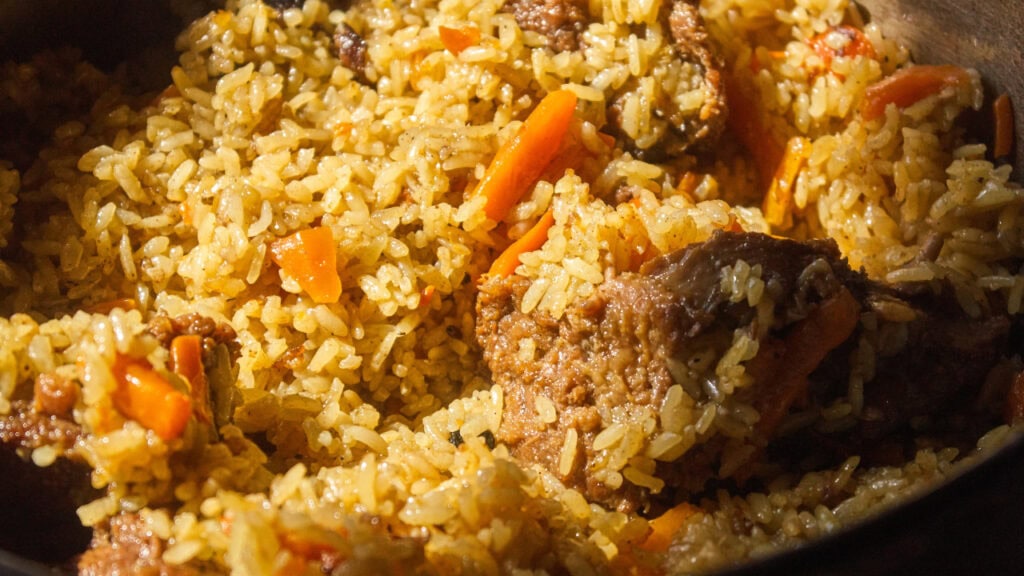
Pilau is a richly spiced rice dish that showcases the deep Arab and Indian influence on authentic Tanzanian food. Cooks prepare it with a complex blend of cumin, cardamom, cloves, cinnamon, and black pepper, along with meat (usually beef or goat), onions, and tomatoes.
Pilau is aromatic, warming, and deeply fragrant. Furthermore, the spices build slowly and the rice absorbs both the fat from the meat and the layers of seasoning. It is, therefore, far more complex than it looks at first glance.
Pilau is a celebration food. It appears at weddings, Eid feasts, and family gatherings across Tanzania and the wider Swahili coast. Cooking a good pilau is, in fact, considered a serious culinary skill. Zanzibar and coastal Dar es Salaam are the heartland of excellent pilau.
Travel tip: Order pilau on a Friday in coastal areas — many families cook it to mark the Islamic sabbath, and home-style versions often appear on local restaurant menus.
Chipsi Mayai is Tanzania’s beloved street-food omelette — a crispy, egg-bound cake of chips (French fries) fried together with beaten eggs. It is, without doubt, one of the most popular fast foods in the country.
Think omelette meets hash brown. The exterior turns golden and slightly crispy. The interior, on the other hand, stays soft, eggy, and starchy. It typically comes with a fiery chili sauce and kachumbari on the side.
Chipsi Mayai reflects the practical, adaptable spirit of Tanzanian street food — filling, cheap, and quick. You will find it at chip shops throughout Tanzania, especially in cities. Watch it being made: the cook presses chips into a flat layer, pours beaten eggs over the top, and flips the whole thing in the pan.
Travel tip: Fresh from the pan is always best. Arrive at the stall around lunchtime for the busiest, freshest service.
Mishkaki are marinated meat skewers — cubes of beef, goat, or chicken marinated in spices, lime, and chili, then grilled over charcoal on thin wooden skewers. They bear a resemblance to Middle Eastern kebabs but carry a distinctly Tanzanian flavor profile.
The exterior chars slightly over the coals. Inside, however, the meat stays juicy and tender. The marinade adds a tangy, spiced depth that distinguishes mishkaki from plain grilled meat. These skewers are, in fact, quintessential Tanzanian street food with deep roots in the Swahili coastal grilling tradition.
Zanzibar’s Forodhani Gardens Night Market is legendary for mishkaki. Similarly, Dar es Salaam street markets and Arusha town center are excellent spots to find them. Vendors sell them by the skewer, so order several and eat them standing at the stall.
Travel tip: Pair mishkaki with a cold Tanzanian soda or fresh sugarcane juice for the full street-food experience.
Wali wa Nazi is rice cooked in coconut milk — a fragrant, slightly sweet dish that forms a cornerstone of coastal Tanzanian cuisine. As the rice cooks, it absorbs the coconut milk and becomes creamy, rich, and gently perfumed.
The taste is subtly sweet, nutty, and smooth. The coconut milk adds richness without heaviness. Consequently, Wali wa Nazi pairs beautifully with fish curries, octopus stew, and any coconut-based sauce. On Zanzibar, cooks prepare it as everyday food with the same regularity as plain rice elsewhere in the country.
Travel tip: Request Wali wa Nazi specifically when ordering — many restaurants offer plain rice as the default and prepare the coconut version only on request.
Ndizi Nyama is a rich stew of unripe cooking bananas (ndizi) and meat (nyama) — typically beef, goat, or chicken. As it simmers, the bananas soften and absorb the savory, spiced broth around them.
The flavor is earthy, starchy, and deeply comforting. Cooking bananas have a firmer texture than ripe bananas and taste closer to potato than fruit. Combined with slow-cooked meat and a tomato-based sauce, the result is one of the most hearty and satisfying dishes in Tanzanian cuisine.
Ndizi Nyama comes from the Chagga people of the Kilimanjaro region, where cooking bananas are a staple crop. It is, in fact, one of the oldest traditional dishes in the northern highlands. Moshi and the Kilimanjaro region are therefore the best places to find authentic versions.
Travel tip: Pair Ndizi Nyama with a side of sukuma wiki for a balanced and genuinely traditional highland meal.
Samaki wa Kupaka is grilled fish with a thick, spiced coconut marinade — a dish that defines Zanzibari seafood cooking. Cooks first partially grill the fish (typically red snapper or kingfish), then baste it with a rich sauce of coconut milk, turmeric, chili, lime, and garlic, and return it to the grill to caramelize.
The flavor is smoky, creamy, tangy, and fragrant all at once. The coconut-spice crust forms a caramelized layer over the fish, while the interior stays moist and flaky. It is, without question, among the most complex and rewarding dishes in all of Tanzanian food.
Its spice profile reflects centuries of Indian Ocean trade, combining East African coastal technique with South Asian spice traditions. Zanzibar — particularly Stone Town and Nungwi — is the heartland of this dish.
Travel tip: Ask for freshly caught fish and pair Samaki wa Kupaka with Wali wa Nazi for the complete coastal experience.
Mchuzi wa Samaki is a Tanzanian fish curry — a lightly spiced, tomato-based stew made with fresh fish, coconut milk or tamarind, onions, garlic, ginger, and a blend of East African spices. It is lighter than Indian fish curries, yet equally satisfying.
The sauce is bright, tangy, and warmly spiced. The tomatoes and tamarind provide a pleasant acidity that balances the sweetness of the coconut milk. Furthermore, the fish absorbs the surrounding flavors beautifully as it simmers.
This dish reflects the deep integration of spice-trade ingredients into everyday coastal cooking. In Zanzibar, it ranks among the most common lunch dishes. In Dar es Salaam, harbor-area restaurants near the fish market serve some of the freshest versions available.
Travel tip: Visit a local hoteli near a fish market rather than a tourist-oriented restaurant — you get fresher fish, more authentic flavors, and significantly lower prices.
Zanzibar Pizza is arguably the most unique street food invention in East Africa. Despite its name, it bears almost no resemblance to Italian pizza. Instead, a vendor stretches a thin crepe-like dough by hand, fills it with minced meat, egg, mayonnaise, onion, and cheese — or banana and Nutella for the dessert version — then folds and fries it flat on a griddle.
The dough turns golden and slightly crunchy on the griddle. Inside, however, the filling stays soft, rich, and molten. Vendors invented Zanzibar Pizza at Forodhani Gardens Night Market in Stone Town, and it has since become the defining street food of the island — a genuine local creation with no direct culinary ancestor anywhere else in the world.
Travel tip: Go after sunset, order one savory and one sweet version, and watch the vendor hand-stretch the dough — it is a performance as much as a meal.
Beyond sit-down meals, Tanzanian street food offers some of the most exciting and affordable eating in East Africa. Here are five options that deserve your attention.
Mandazi are lightly sweetened, triangle-shaped doughnuts made from wheat flour, coconut milk, sugar, and cardamom. They are deep-fried until golden — soft inside, slightly crispy outside, and delicately fragrant. You will find mandazi vendors at every bus station and market from early morning onward.
Vitumbua, on the other hand, are small, round rice pancakes cooked in a special mold pan. Made from fermented rice flour and coconut milk, they have a soft, spongy texture with a gentle sweetness. Both pair perfectly with spiced chai and serve as the classic Tanzanian breakfast combination along the Swahili coast.
Mahindi Choma — roasted maize — is the simplest and most universal street food in Tanzania. Vendors roast corn on the cob directly over charcoal and rub it with salt, lime, and sometimes chili powder. The charring adds a smokiness that transforms plain corn into something genuinely memorable.
Roasted cassava (muhogo) works similarly. Vendors roast it over charcoal until the exterior chars and the interior becomes soft and starchy. It comes with chili sauce or salt, and it makes one of the most popular after-dark snacks in Dar es Salaam.
Urojo — also known as Zanzibar Mix — is a complex street food unique to Zanzibar. A thin, tart mango-coconut broth combines with bhajia (spiced chickpea fritters), boiled potatoes, cassava chips, chutney, chili sauce, and crushed crispy snacks. The combination of textures — crunchy, soft, creamy, and liquid all at once — makes it one of the most extraordinary dishes in all of Tanzanian street food.
Tanzania offers more plant-based options than most travelers expect. While meat is central to celebrations, everyday cooking relies heavily on vegetables, legumes, and grains. In fact, many of Tanzania’s most beloved dishes are naturally vegetarian.
Maharagwe — slow-cooked kidney beans in a tomato and spice sauce — is one of the great everyday dishes of Tanzanian cuisine. Rich, hearty, and filling, it pairs well with rice or chapati. Mchicha wa Nazi, meanwhile, is a Swahili coastal dish of amaranth leaves cooked in coconut milk — creamy, nutritious, and deeply satisfying. Both dishes prove that local food in Tanzania does not need meat to be excellent.
Sukuma wiki — literally “push the week” in Swahili — is braised kale or collard greens sautéed with onion and tomato. The vegetarian version is ubiquitous across Tanzania and genuinely delicious. In addition, mchuzi wa maboga (pumpkin curry) and viazi karai (spiced fried potatoes) are widely available plant-based options throughout the country.
The Swahili coast also offers a rich collection of coconut-based vegetarian meals — coconut lentil soup, coconut bean stew, and coconut milk rice all appear regularly on coastal menus. The coconut milk adds richness and depth that makes these dishes satisfying as complete meals in their own right.
Understanding how Tanzanians eat will enrich your experience considerably and show genuine respect for local culture.
In many Tanzanian homes and local restaurants, people eat ugali with the right hand. The right hand is for eating; the left hand carries a negative connotation in East African culture. In tourist restaurants, utensils are available. However, joining in with the hand-eating tradition when a local family invites you is a meaningful sign of respect.
Tanzanian hospitality is, moreover, extremely generous. If someone invites you to eat in their home, accepting food — even if you are not hungry — is the polite choice. Refusing outright can feel rude to the host. Taking a small portion and complimenting the food is, therefore, always the right approach.
Food in Tanzania is communal. Groups share large dishes from a central bowl or plate, and local restaurants expect this behavior. In addition, always wash your hands before eating — a bowl and soap are typically available at local restaurants.
During Ramadan in Muslim coastal areas, furthermore, avoid eating or drinking in public during daylight hours. Always use your right hand to give or receive food, money, or gifts. Finally, never waste food that someone has served you — take only what you can genuinely eat.
Arusha is Tanzania’s northern safari gateway and a genuinely exciting food destination. The central market overflows with fresh vegetables, spices, and street food vendors. Local restaurants around the clock tower serve excellent ugali with nyama choma. Furthermore, the city has a long-established Indian-influenced restaurant scene that reflects Tanzania’s diverse food culture.
Moshi sits at the foot of Kilimanjaro and is where highland Tanzanian food traditions are strongest. This is, in fact, the best place to try Ndizi Nyama and other Chagga specialties. The town market is lively and the local hotelis around the clock tower offer excellent value. Additionally, the Kilimanjaro region produces some of Tanzania’s finest arabica coffee — well worth trying alongside your meal.
Dar es Salaam has the most diverse food scene in Tanzania. From upscale seafood restaurants in Msasani Peninsula to the extraordinary street food energy of Kariakoo market, the city covers every appetite and budget. The Kivukoni Fish Market on the waterfront is, moreover, one of the best places in East Africa to buy and eat fresh fish.
Zanzibar stands in a category of its own as a food destination. The spice island offers the most sophisticated expression of Swahili coastal cuisine anywhere in Tanzania. Forodhani Gardens Night Market in Stone Town is unmissable — dozens of vendors grill seafood, make Zanzibar Pizza, and serve Urojo Mix as the sun sets over the Indian Ocean. The northern beaches of Nungwi and Kendwa, furthermore, have outstanding fresh seafood restaurants worth a dedicated visit.
Mwanza on the shores of Lake Victoria centers its food culture on Nile perch (sangara). The lake supplies fresh fish to the entire city, and local restaurants grill, fry, and stew it in dozens of ways. The fish market near the ferry terminal is, without doubt, one of the most atmospheric food experiences in inland Tanzania.
Food in Tanzania offers something that very few cuisines in the world can match — genuine depth rooted in history, geography, and community. Every dish tells a story: of Arab trade ships arriving with cardamom, of Indian merchants settling along the coast, of Swahili families perfecting the art of coconut cookery, and of highland farmers growing banana varieties found nowhere else on earth.
The flavors of authentic Tanzanian food do not shout. Instead, they build slowly and reward attention. The complexity of a well-made pilau, for example, unfolds over an entire meal. A bowl of maharagwe at a simple local restaurant can be as satisfying as any fine dining experience. Moreover, street food eaten at a charcoal grill after dark is one of the great travel pleasures available anywhere in Africa.
Beyond flavor, eating local food in Tanzania connects travelers to the country in ways that a safari or a beach resort simply cannot replicate. It starts conversations, builds friendships, and offers a genuine window into how Tanzanians live. Therefore, if you want to truly understand Tanzania — not just see it — eat what the people eat, sit where they sit, and let the food speak.
What is the most popular food in Tanzania? Ugali is the most widely eaten food in Tanzania — a stiff maize porridge that accompanies nearly every main meal. For meat dishes, Nyama Choma is the most beloved. Among street foods, furthermore, Chipsi Mayai and Mishkaki enjoy enormous popularity across all regions and age groups.
What traditional food do Tanzanians eat? Traditional Tanzanian food varies by region. Coastal communities eat rice with coconut-based fish curries, pilau, and grilled seafood. Highland communities, on the other hand, eat ugali with bean stews, braised greens, and banana-based dishes like Ndizi Nyama. Across the country, meals typically combine a starch with a protein and at least one vegetable side.
Is Tanzanian food spicy? Tanzanian food uses spices generously but is not always hot in the way that some South Asian cuisines are. Coastal and Zanzibari food, for instance, features aromatic spices like cardamom, cloves, and cumin that create complexity without intense heat. Fresh chili is available as a condiment, and diners add it according to their own preference. Inland food tends to be milder overall.
What food should tourists try in Tanzania? Tourists should prioritize Zanzibar Pizza at Forodhani Night Market, Nyama Choma at a local grill, Pilau at a coastal restaurant, Chipsi Mayai from a street stall, and Samaki wa Kupaka in Zanzibar or Dar es Salaam. For street food, furthermore, Urojo Mix in Zanzibar and Mishkaki skewers at any night market are essential experiences.
What is the national dish of Tanzania? Tanzania does not have an officially designated national dish. However, Ugali is widely considered the most representative food in Tanzania. Nyama Choma is sometimes described as the national celebration food. On the coast and in Zanzibar, moreover, Pilau and grilled seafood carry enormous cultural significance.
Is vegetarian food common in Tanzania? Yes — more than most travelers expect. Beans, lentils, green vegetables, coconut-based stews, and rice dishes form the backbone of everyday Tanzanian eating. Maharagwe, sukuma wiki, and mchicha wa nazi are all widely available and genuinely delicious. In cities and tourist centers, furthermore, restaurants increasingly offer clearly labeled vegetarian options.
What do people eat for breakfast in Tanzania? Common breakfast options include Mandazi or Vitumbua served with spiced chai. Uji — a thin, fermented porridge made from millet or sorghum — is a traditional morning drink, especially for children and the elderly. In cities, moreover, bread with margarine and sweet tea is a quick daily staple. Coastal households, on the other hand, often start the day with coconut-rice porridge or leftover chapati.
This article draws on direct knowledge of Tanzanian food culture and local culinary traditions across the mainland and Zanzibar. Food traditions described here are long-established and represent authentic local practice.