
If you’ve ever seen either a gazelle or an antelope, you might be scratching your head, wondering how to tell the two apart, as, on a general inspection, you wouldn’t be blamed for thinking that they both look similar. Especially if they are a young calve or fawn – you’d be most likely to scratch your head and ask yourself, gazelle vs antelope – which one is it?
But we’re here to give you a definitive outline of each to avoid any future misunderstandings, and it will make you look good knowing you can point each one out.
Read on to learn more about these two majestic-looking species.
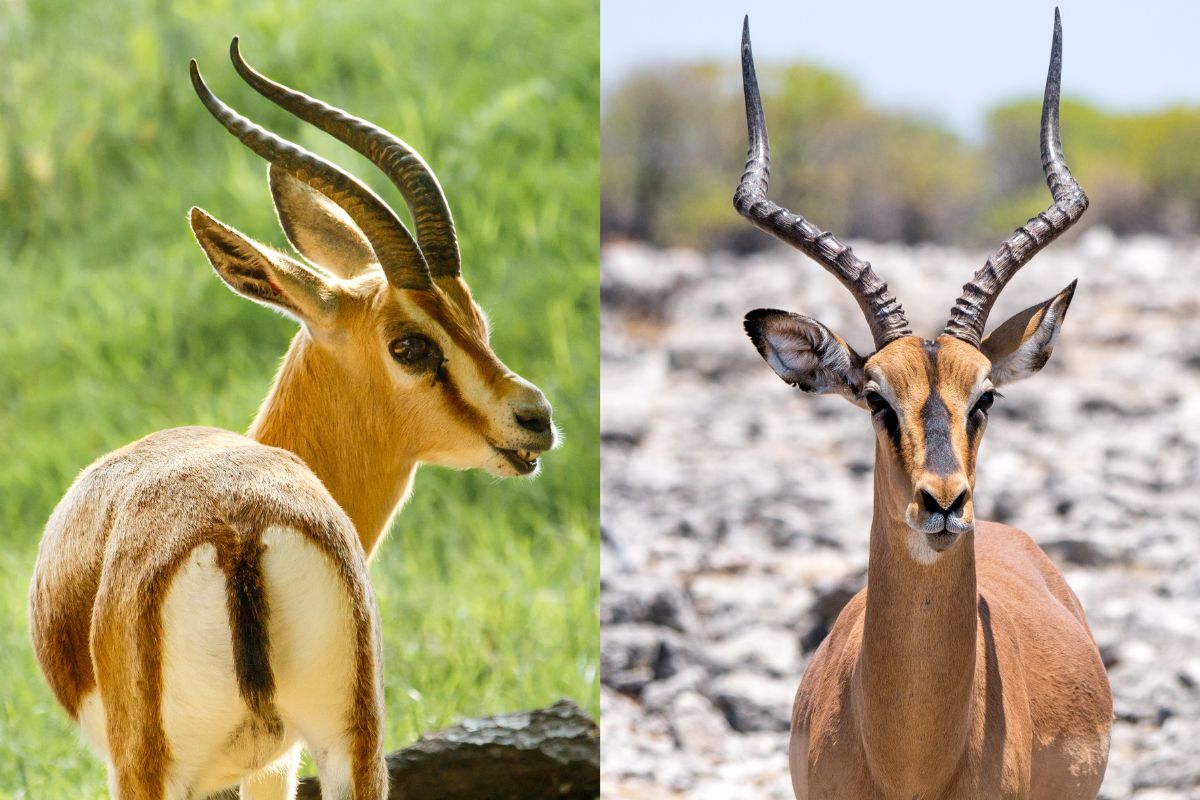
Put simply, all gazelles are antelopes, but not all antelopes are gazelles. More specifically, gazelle is a genus of antelope, so they are related in classification but less similar than an individual species.
You can identify these by their silky tan coats and display patterns of stripes and spots.
They also bear ring-shaped horns and are usually found in places such as Asia and China. Additionally, they can be found from the Horn of Africa, all the way to Tanzania.
Their diet consists of plant leaves and stems, as they’re not as dependent on water as other species are.
These animals are also quite agile, so they can get out of a tight spot fast, as they are often prey to many predators such as cheetahs and even pythons. Gazelles have two toes encased in hooves, which is useful for when they need to bounce or slot out of danger.
These animals are part of the gazelle gang:
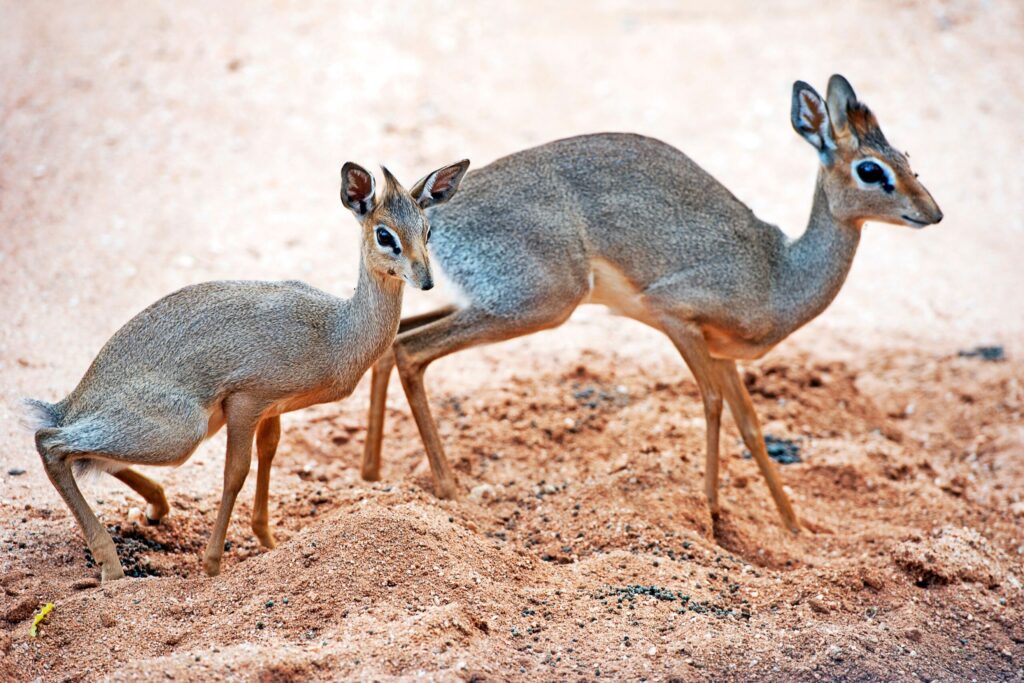
In comparison regarding gazelle vs antelope, the latter has even toes, smooth hair, and horns that are more straight-looking. Most male antelopes have horns, and so do only two-thirds of female antelopes.
These species have a larger body, but that does mean that they are not as quick as gazelles, but their diet differs slightly, as some species of antelopes like to feed on small birds, mammals, and insects.
During dry periods, where feed is below 40% moisture content, an antelope will drink around 2.8 liters of water a day, but this is only if they can’t find water through the consumption of things such as grass, leaves, or mulch.
These animals are part of the antelope family:
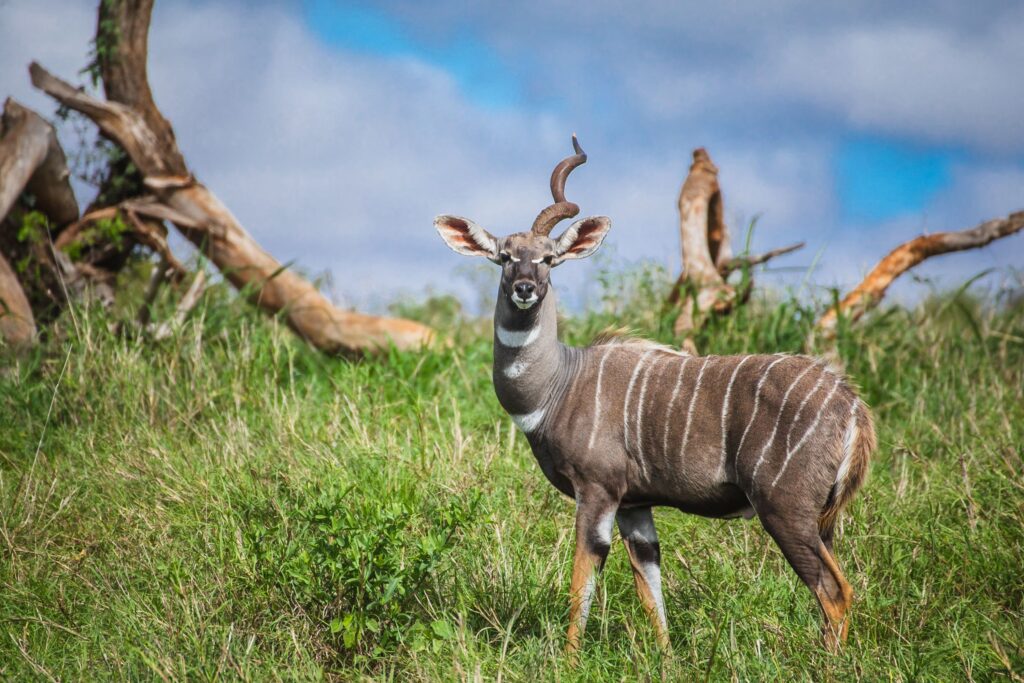
You can often find specific types of antelope in various regions of Africa and Europe, and as there are 91 different species of antelope, we don’t blame you for not knowing the key features of each one. And sometimes, you might even find a unicorn 😉
Now you have an idea of each species, it’s a good idea to talk about their similarities. These common characteristics between antelope vs gazelle might be why we often confuse the two. The main one, however, is that both are members of the bovid family, which is a broad category in and of itself.
Both are usually considered herbivores, as some types of antelope, like the duiker, might divert from this description slightly as they can be considered omnivores. Still, this can be quite flexible, depending on the environment and the scarcity of certain sources.
One of the most notable similarities is that both types of bovid tend to travel in small to large groups, as some of these can have up to 700 members. However, antelopes can move in larger groups of thousands, which is more apparent when witnessing their annual migration.
If you watch a gazelle averting danger, you’ll notice how they leap or slot to alert others in their group or use it to slip away from a predator, and you can also see this movement in action during mating season.
Interestingly, an antelope can inhabit a range of environments such as deserts, cold tundras, and areas by lakes and oceans, and some gazelles, like the Tibetan, live in high mountain meadows, as other species are more adapted to live in dry and desert environments.
And if you want to see gazelles and antelopes with your own eyes, look no further! Contact us today and book a trip of your lifetime with us.