
There is a moment — and every seasoned traveler knows it — when the engine of your Land Cruiser cuts out in the middle of the Serengeti, the dust settles, and a silence so profound descends that you can actually hear your own heartbeat. On the horizon, a lioness watches her cubs tumble through golden grass. The sky above you is enormous and impossibly blue. And you realize: this is exactly what you came for. If you want to know how to book a private safari in Tanzania, you have come to the right place. This comprehensive guide walks you through every step of planning, budgeting, and booking a private safari in Tanzania — so that when that perfect moment arrives, nothing stands between you and the wild.
Tanzania is not just a destination. It is, above all, an encounter. Home to the Serengeti, the Ngorongoro Crater, Tarangire, Ruaha, and Selous — among the greatest wildlife reserves on the planet — Tanzania offers a safari experience that is simply unmatched anywhere in the world. Furthermore, when you choose a private safari, you are not just booking a trip. You are crafting a story that is entirely your own.
The question is not really why you should book a private safari in Tanzania — the better question is: why would you choose anything else?
Tanzania’s national parks welcome hundreds of thousands of visitors every year, and the popular circuits — particularly around the Serengeti and Ngorongoro — can feel surprisingly busy during peak season. Shared group safaris, while budget-friendly, come with real compromises: fixed itineraries, early morning wake-up calls timed to someone else’s preferences, and a vehicle full of strangers who may not share your passion for lingering at a cheetah sighting until the very last possible moment.
A private Tanzania safari changes everything. Your vehicle belongs entirely to your group. Your guide focuses solely on you. Moreover, your schedule bends around your desires, not a timetable someone printed weeks in advance. Want to spend three hours watching a leopard in a fever tree? Done. Prefer a sunset champagne stop on the edge of the Ngorongoro Crater? Absolutely. Would you rather skip the standard route and explore a remote corner of Ruaha National Park where you might not see another vehicle for days? That is exactly the kind of experience a private guided safari in Tanzania delivers.
Beyond flexibility, private safaris offer a depth of experience that group tours simply cannot replicate. Your guide — often a third-generation Tanzanian naturalist who grew up reading the bush — has the time and freedom to engage with you personally, answering your questions, sharing stories, and tailoring every game drive to whatever fascinates you most: birds, big cats, elephants, photography, or the intricate ecosystems that make this part of East Africa so extraordinary.
For families, honeymooners, photographers, and anyone celebrating a milestone, a luxury private safari in Tanzania is not an indulgence. It is, instead, the difference between witnessing Africa and truly experiencing it. Consequently, travelers who choose this route consistently report it as the most meaningful trip of their lives.

Tanzania’s safari circuit is extraordinary in both scale and diversity. Therefore, understanding which parks suit your interests is an essential early step when you book a private safari in Tanzania and start planning a tailor-made Tanzania safari.
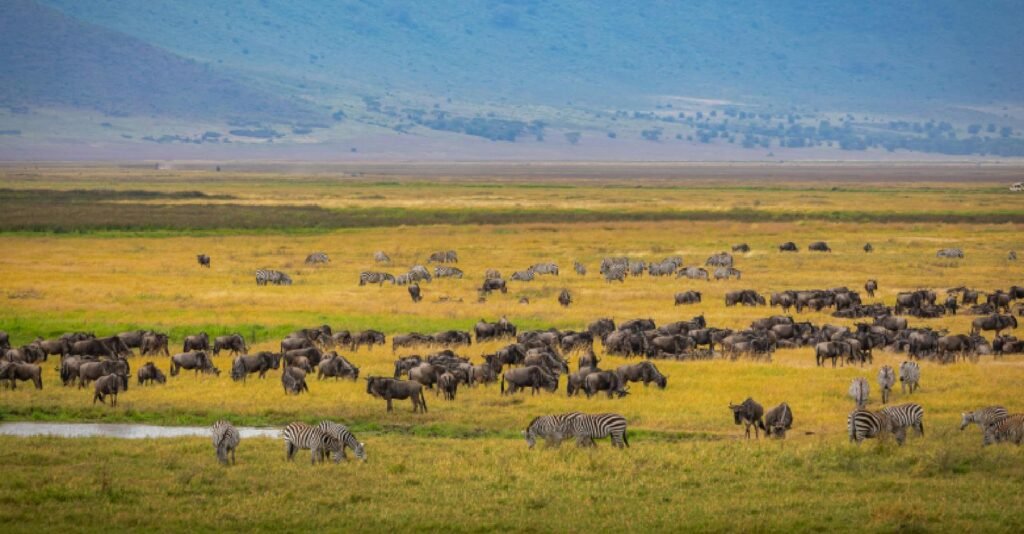
There is no more iconic wildlife destination on earth. Covering nearly 15,000 square kilometers of open savannah, acacia woodland, and riverine forest, the Serengeti safari experience defines sheer, breathtaking abundance. The Great Wildebeest Migration — the largest movement of mammals on the planet — passes through here between January and December in a continuous, circular journey. Witnessing the river crossings, where hundreds of thousands of wildebeest plunge into crocodile-filled waters, ranks among the most dramatic wildlife spectacles imaginable. Additionally, private safari vehicles can position themselves with care and patience, while group vehicles must share the best viewpoints.
The Ngorongoro Crater earns its nickname as the “Garden of Eden.” This collapsed volcanic caldera — roughly 19 kilometers across — forms a self-contained ecosystem sheltering an astonishing density of wildlife, including one of Africa’s last stable populations of black rhino. A Ngorongoro Crater tour on a private basis means you descend into the crater at your own pace, spend as long as you wish, and work with a guide who interprets the crater’s remarkable geology and ecology in genuine depth.
Tarangire is the underrated jewel of the northern circuit. Famous for its ancient baobab trees and enormous elephant herds, it also offers some of Tanzania’s best birdwatching, with over 550 recorded species. During the dry season, the Tarangire River becomes a magnet for wildlife of extraordinary variety. On a private Tarangire safari, your guide takes back routes through the park that group vehicles rarely explore, dramatically increasing your chances of exclusive sightings.
The southern circuit, centered on the vast Selous (now largely known as Nyerere National Park), offers a profoundly different kind of private safari in Tanzania. This is true wilderness — the reserve is larger than Switzerland — and visitor numbers remain comparatively low. Here, boat safaris on the Rufiji River bring you eye-level with hippos and crocodiles. Furthermore, walking safaris led by armed rangers offer an intimacy with the bush that no vehicle-based game drive can replicate.
Ruaha is Tanzania’s largest national park, yet it receives a fraction of the Serengeti’s visitors. That relative solitude is precisely its appeal. The park shelters large lion prides, significant populations of wild dog, and a landscape of dramatic rocky outcrops and ancient riverbeds. A private safari here means game drives where you encounter no other vehicle for hours.
Smaller than its neighbors, Lake Manyara punches well above its weight. It is home to Tanzania’s famous tree-climbing lions, enormous flocks of flamingos, and an extraordinary diversity of birdlife. As a result, it serves as an ideal introduction to the northern circuit and pairs beautifully with Ngorongoro and the Serengeti.
Booking a private safari can feel overwhelming at first — but, broken down into clear steps, the process becomes entirely manageable. Here is exactly how to book a private safari in Tanzania from start to finish.
Before you contact a single tour operator, spend time thinking about what kind of experience you actually want. Ask yourself:
Not all safari operators are created equal, and consequently, this is one of the most important decisions you make when you book a private safari in Tanzania. Look for operators who:
Request detailed, written itineraries from at least three operators before you decide. Pay attention to the quality of their communication — responsiveness and clarity at this stage reflects how they treat you on the ground.
A reputable operator works collaboratively with you to design a custom Tanzania safari package that fits your timeline, budget, and interests. This is where the true value of booking a private safari in Tanzania reveals itself. Unlike group tours, your itinerary is not a template — it is a document built entirely around you.
During this stage, discuss the sequence of parks that makes logistical and ecological sense for your travel dates, the type and style of accommodation at each location, and optional add-ons such as walking safaris, night drives, cultural visits, or hot air balloon flights over the Serengeti. Also consider airport transfers, domestic flights between parks, and border crossings if you plan to combine Tanzania with Kenya or Zanzibar.
Ask for a fully itemized breakdown of costs. A reliable operator clearly specifies what the price includes: park fees, accommodation, all meals, game drives, transfers, guides, and vehicle fuel. Equally important — ask what the price does not cover. Gratuities, international flights, travel insurance, personal items, and optional activities like balloon safaris typically fall outside the quoted price.
At this stage, compare the value different operators offer rather than simply the price tag. The cheapest quote may indicate corners being cut on vehicle quality, guide experience, or accommodation standards.
Before committing to any booking, make sure you have comprehensive travel insurance that specifically covers safari activities, emergency medical evacuation, and trip cancellation. Additionally, confirm what documentation Tanzania requires for entry — most nationalities need a visa, which you can arrange online in advance through the Tanzania Immigration Services website.
Most reputable operators require a deposit of 20–30% of the total cost to secure your dates, with the balance due 60–90 days before departure. Use a payment method that offers consumer protection, and request a formal booking confirmation with all details in writing.
In the weeks before departure, your operator provides a detailed pre-departure information pack covering what to pack, recommended vaccinations, visa requirements, currency advice, and tips for your specific itinerary. Good operators stay available to answer last-minute questions right up to your departure date.
Tanzania welcomes visitors year-round, but the timing of your trip significantly affects what you experience. Understanding the seasonal rhythms is therefore essential when you plan how to book a private safari in Tanzania. For a full breakdown, see our guide on the best time to visit Tanzania.
This is peak safari season, and for good reason. Vegetation thins out, animals congregate around water sources, and game viewing reaches its most reliable and consistent levels. The Great Migration river crossings in the Serengeti typically occur during this period. However, accommodation rates are at their highest, and popular parks feel busier — though a private safari mitigates this significantly.
The Serengeti’s southern reaches and the Ndutu area host the calving season, an extraordinary spectacle as thousands of wildebeest calves are born within a few weeks. Predator activity intensifies as a result. This period also delivers excellent game viewing at the Ngorongoro Crater and Tarangire, and accommodation rates run more favorably than peak season.
The short rains typically fall briefly each afternoon, leaving mornings clear and landscapes spectacularly lush. Birdwatching reaches exceptional levels, migratory species arrive, and visitor numbers drop noticeably. For this reason, November is one of the most rewarding — and underrated — times to book a private safari in Tanzania.
Heavy rains make some areas difficult to access, and certain lodges close for the season. Nevertheless, photographers find the dramatic light extraordinary, baby animals are everywhere, and travelers who visit during this period enjoy genuinely exclusive experiences at reduced rates.
The Tanzania safari cost is one of the most common questions prospective travelers ask, and the honest answer is: it varies enormously. The total depends on the level of accommodation, the duration of your trip, the parks you visit, and how many people share your vehicle.
Budget Private Safari — $300–$600 per person per day Basic tented camps or guesthouses, older-model safari vehicles, and less experienced guides still deliver a rewarding experience, though with fewer refinements.
Mid-Range Private Safari — $600–$1,000 per person per day Comfortable tented camps and lodges with ensuite facilities, good-quality vehicles, and experienced guides form the sweet spot of value and quality for most travelers.
Luxury Private Safari — $1,000–$3,000+ per person per day Iconic lodges and exclusive camps with private plunge pools, gourmet dining, and exceptional guide talent define this tier. Moreover, some properties offer private conservancies where no other vehicles enter.
Ultra-Luxury / Exclusive-Use — $5,000+ per person per day Entire camps reserved exclusively for your group, helicopter transfers, private chefs, and fully bespoke programming represent the ultimate in exclusivity.
Several variables move the price substantially. First, the number of travelers sharing the vehicle matters — more travelers means a lower per-person cost. Second, domestic flight costs between parks (often $150–$500 per flight segment) add up quickly. Third, seasonal pricing means peak-season rates run higher. Finally, optional experiences like balloon safaris (approximately $600 per person) or walking safaris carry additional fees.
Always request an all-inclusive Tanzania safari package quote so you compare options on a like-for-like basis.
Choosing between luxury and mid-range ultimately comes down to priorities, not just budget.
Mid-range safaris offer genuine quality and comfort without the premium price tag. Many of Tanzania’s mid-range tented camps are spectacularly located, staffed by passionate and knowledgeable guides, and deliver the core safari experience with complete authenticity. If wildlife and wilderness are your primary focus — and for many travelers, they absolutely should be — a thoughtfully chosen mid-range option delivers memories every bit as powerful as a $2,000-per-night lodge. Therefore, do not assume that spending less means experiencing less.
Luxury safaris add a layer of comfort, service, and aesthetic refinement that is genuinely remarkable. Imagine returning from a morning game drive to find a personal attendant drawing a bush bath under a canopy of acacia trees as the sun sets over the savannah. Dinner arrives under the stars, a private chef prepares it using locally sourced ingredients, and the wine list has been carefully curated. For honeymooners, anniversary travelers, and those who want to combine extraordinary wildlife with extraordinary comfort, a luxury private safari in Tanzania is worth every dollar.
The choice between the two is not a question of which is better. Rather, it is a question of what matters most to you.
The best safari operators in Tanzania combine deep local knowledge, impeccable logistics, and genuine passion for conservation. When you evaluate companies as you research how to book a private safari in Tanzania, consider the following criteria.
Find out how long the operator has been running safaris. Ask whether they specialize in Tanzania or offer it as one of fifty destinations. Specialists consistently outperform generalists when it comes to on-the-ground expertise.
Ask specifically about guide training, qualifications, and tenure with the company. The best operators invest significantly in their guides and retain them long-term. Additionally, request photos of actual safari vehicles. Look for custom-built Land Cruisers with pop-up roofs, proper equipment charging, and adequate space. Confirm that your group has the vehicle exclusively.
The best operators work directly with local Maasai and Tanzanian communities, contribute to conservation initiatives, and practice low-impact tourism. Ask about their policies. Furthermore, a trustworthy operator answers every question directly, provides references without hesitation, and produces a clear, detailed contract. TATO membership is a good baseline indicator of legitimacy.
A well-constructed Tanzania safari packages all inclusive quote typically covers the following:
Several costs fall outside the standard package. International flights to Tanzania — usually into Kilimanjaro International Airport or Julius Nyerere International in Dar es Salaam — sit outside the quote. Domestic charter flights between parks are usually optional but strongly recommended for longer circuits. Alcoholic beverages, gratuities for guides and camp staff, travel insurance, optional activities like balloon safaris, and personal shopping all fall to the traveler.
Always request a written, itemized quote. If anything is unclear, ask for clarification in writing before committing.
Part of the magic when you book a private safari in Tanzania is choosing where you sleep — and Tanzania’s accommodation landscape is extraordinarily diverse.
Permanent Luxury Lodges offer fixed structures with all the amenities of a boutique hotel — private plunge pools, spa facilities, curated wine cellars, and stunning architectural design that frames extraordinary views.
Luxury Tented Camps deliver the classic safari experience. Spacious canvas tents on raised platforms come with proper ensuite bathrooms, comfortable beds, and often a private deck overlooking a waterhole or river. The sound of the African night — hyenas whooping, lions coughing, insects thrumming — forms your evening soundtrack.
Mobile / Migration Camps are temporary camps that move with the wildlife across the Serengeti, allowing you to be in exactly the right place at the right time for the Great Migration.
Fly Camps are ultra-lightweight camps set deep in the bush, far from any permanent infrastructure. Sleeping under a billion stars with virtually nothing between you and the wilderness is a defining experience for adventurous travelers.
Mid-Range Permanent Camps provide comfortable, well-run tented camps with ensuite facilities and solid food, delivering the core safari experience without luxury pricing.
Getting between Tanzania’s parks efficiently requires genuine logistical planning — and the right choice of transport shapes your entire experience.
Road Transfers work well for shorter distances, such as Arusha to Tarangire or Ngorongoro to the Serengeti’s southern entrance. These transfers also allow for opportunistic wildlife sightings along the way.
Scheduled Domestic Flights with airlines like Coastal Aviation, Air Excel, and Auric Air cover routes between Arusha, the Serengeti airstrips, Manyara, Ruaha, and Selous. They save significant travel time and remain reasonably priced.
Charter Flights give you maximum flexibility and access to remote airstrips. Your operator arranges a charter that departs exactly when and where you need it — a particularly valuable option for the southern circuit.
Hot Air Balloon Safaris are available primarily over the Serengeti. A dawn balloon flight offers a perspective of the savannah that no vehicle replicates — floating silently over vast herds at sunrise before landing for a champagne bush breakfast. Budget approximately $600 per person for this unforgettable add-on.
Going on your first private safari in Tanzania? Here is what experienced safari travelers wish they had known in advance.
Pack neutral-colored clothing. Khaki, olive, beige, and brown are the standard — they don’t attract insects and blend into the environment. Bright colors, by contrast, can disturb wildlife.
Bring quality binoculars. Even the best guide cannot make a cheetah appear closer than it is. A pair of 8×42 or 10×42 binoculars will transform your game viewing experience completely.
Embrace early mornings. The best game activity happens at dawn. An early start might feel uncomfortable at first, but the rewards — cool air, golden light, animals at their most active — are extraordinary.
Tip your guide generously. Guides work extremely hard, and tips form a significant part of their income. Budget $15–25 per person per day for your guide, and $10–15 per day for your camp staff.
Stay flexible. The bush does not operate on a schedule. The most extraordinary sightings often happen unexpectedly, so a flexible attitude serves you far better than a rigid agenda.
Drink plenty of water. The combination of altitude, heat, and excitement means dehydration sneaks up quickly. Most operators provide plenty of water in the vehicle, so take full advantage.
Respect the wildlife always. You are a guest in these animals’ home. Follow your guide’s instructions about safe distances and behavior at all times — it is not just about your safety, but about ensuring these animals remain comfortable with human presence for future generations of travelers.
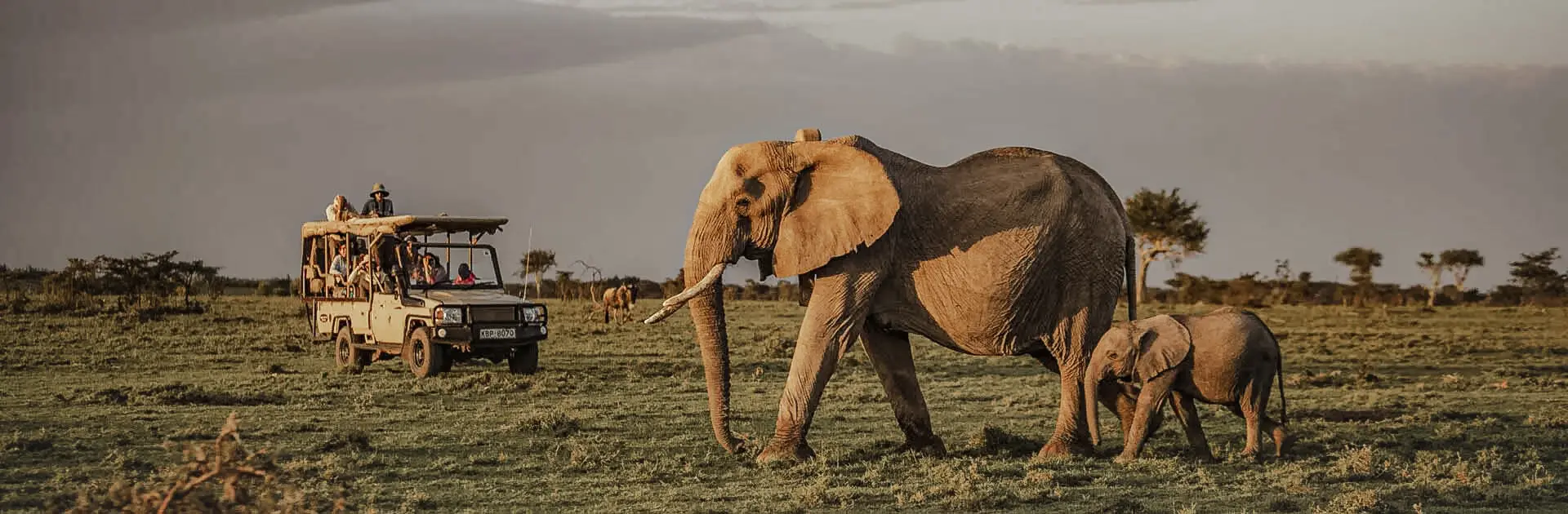
A family safari in Tanzania ranks among the most transformative experiences you can give your children — and one of the most memorable experiences you ever share together as a family. Watching a child’s face as a herd of elephants walks within meters of your vehicle is something no parent ever forgets.
Private safaris are especially well-suited for families because they eliminate the compromises inherent in group tours. Your vehicle moves at your pace. If the children need a break, you take one. If they become transfixed by a dung beetle rolling its ball across the track, your guide can spend twenty minutes explaining the ecological role of dung beetles in the African ecosystem — something a group tour schedule never allows.
Look for operators who specifically offer family-oriented programming: junior naturalist activities, age-appropriate wildlife guides, and lodges with family tents or adjoining rooms. Some camps offer dedicated children’s guides who excel at engaging young travelers with the bush at their level. As a general guideline, children aged seven and above are well-suited for a safari experience, though many lodges set minimum age requirements of six to eight years.
Few places on earth are more romantic than the Tanzanian wilderness. A honeymoon safari in Tanzania combines the drama and wildness of the bush with the intimacy of a private experience — and the best luxury operators make every detail unforgettable.
Picture a private dinner table set under the stars in a remote corner of the Serengeti, your guide leading you to a spot where fireflies rise from the grass at dusk, a hot air balloon over the plains at sunrise followed by a champagne breakfast, and evenings in a spectacular suite where the canvas walls open to frame an endless African sky.
Many lodges offer dedicated honeymoon extras: in-room dining, rose petal baths, private sundowners, and couples’ spa treatments. Communicate clearly with your operator that this is a honeymoon trip — the best operators coordinate with each property to ensure the experience exceeds every expectation. After your safari, moreover, extending the journey with a stay on Zanzibar — the spice island jewel of the Indian Ocean — completes an unforgettable trip beautifully.
Tanzania is a photographer’s paradise, and consequently, a private guided safari in Tanzania gives you the one thing photographers crave above all else: time and complete freedom.
When you book a private safari in Tanzania specifically for photography, look for operators who work regularly with photographers and who understand the patience required for exceptional wildlife images. Specialist photography guides know how to position the vehicle for optimal light, anticipate animal behavior, and suggest compositions that go far beyond the obvious shot.
In terms of gear, a telephoto lens of at least 400mm is essential for tight wildlife shots. A 70–200mm zoom handles many mid-range situations beautifully. Additionally, a wide-angle lens (16–35mm) captures the extraordinary landscape and environmental portraits. Beanbags for stabilizing long lenses on the vehicle window are invaluable, and extra battery packs are critical — you shoot far more than you expect.
Some operators offer dedicated photographic vehicles modified with lower, wider windows for better shooting angles, equipment charging systems, and lower vehicle profiles. If photography is your primary purpose, specifically request a photographic vehicle when you book your private safari in Tanzania.
Q: How far in advance should I book a private safari in Tanzania? For peak season travel (June to October), booking 9–12 months in advance is strongly recommended, particularly for popular lodges in the Serengeti. For shoulder and low season, 3–6 months is generally sufficient. The earlier you book, the better your accommodation choices.
Q: Can I combine a Tanzania safari with climbing Mount Kilimanjaro? Absolutely — and many travelers do exactly this. Combining a wildlife safari with a Mount Kilimanjaro climbing adventure is one of Africa’s great dual experiences. Most operators arrange both within a single itinerary. Note, however, that Kilimanjaro climbs require a minimum of 6–8 days for adequate acclimatization.
Q: Do I need a visa to visit Tanzania? Most nationalities require a visa, which you can arrange as an e-visa in advance through the Tanzania Immigration Services website. A single-entry tourist visa is valid for 90 days and costs $50 USD for most nationalities. Always verify the current requirements for your specific nationality before travel.
Q: What vaccinations do I need for Tanzania? Yellow fever vaccination is required if you arrive from a country with risk of yellow fever transmission. Additionally, ensure you are up to date on hepatitis A and B, typhoid, and tetanus. Anti-malarial medication is recommended for all Tanzania safari destinations. Consult a travel health specialist at least 6–8 weeks before departure.
Q: Is Tanzania safe for safari travel? Tanzania ranks among Africa’s most stable and safe safari destinations. The main national park areas enjoy excellent safety records. As with any international travel, standard precautions apply — use reputable operators, follow guide instructions, and purchase comprehensive travel insurance.
Q: What currency is used in Tanzania? The Tanzanian Shilling (TZS) is the local currency, but US dollars are widely accepted and preferred for safari-related transactions, lodge bills, and tips. Bring a supply of clean, recent-issue US dollar bills. ATMs are available in Arusha and Dar es Salaam, but unreliable or absent in remote safari areas.
Q: How much should I tip on a Tanzania safari? Tipping is an important part of safari culture. As a general guideline, budget $15–25 USD per person per day for your guide/driver, $10–15 per person per day shared among camp staff, and $5–10 per person for transfer drivers. Give tips directly in US dollars, ideally at the end of each leg of your journey.
Q: Is it safe to eat and drink on a Tanzania safari? At reputable lodges and camps, food meets high hygiene standards and is entirely safe to eat. Stick to bottled or filtered water throughout your trip. Your operator provides clear guidance, and most travelers experience no health issues related to food or water.
Q: Can I see the Big Five on a private safari in Tanzania? Yes — Tanzania is one of the best places in the world to see the Big Five: lion, leopard, elephant, buffalo, and rhinoceros. The Serengeti, Ngorongoro Crater, and Tarangire all offer excellent Big Five potential, with Ngorongoro being particularly reliable for black rhino sightings.
Q: What is the difference between a national park and a game reserve in Tanzania? In national parks like the Serengeti and Tarangire, human habitation is not permitted and only vehicle-based safaris operate within the boundaries. In game reserves like the former Selous, a wider range of activities — including walking safaris and boat safaris — may be permitted. Furthermore, private concessions adjacent to national parks often offer additional activities not available within park boundaries themselves.
There has never been a better time to book a private safari in Tanzania. The parks are extraordinary. The operators are world-class. And the experience — that profound, irreversible encounter with the wild heart of Africa — defines the way you see the world for the rest of your life.
Whether you dream of the Great Migration thundering across the Serengeti, the silent grandeur of the Ngorongoro Crater at dawn, the ghost-forest baobabs of Tarangire, or the true wilderness of the Selous — your perfect private safari in Tanzania exists. It is waiting to be custom-built for you, one detail at a time, by people who love this land as deeply as you are about to.
Reach out to our team of WeGude African Safais as your Tanzania safari specialists today. Tell us your dream, and we will handle everything else. Contact us