
Have you ever dreamed of white-sand beaches and turquoise waters? Perhaps you have also wondered: where is Zanzibar, exactly?
In short, Zanzibar is a breathtaking archipelago in the Indian Ocean. It sits just off the east coast of Africa and is one of the continent’s most captivating destinations.
Whether you are planning a trip or simply curious, this guide covers everything. You will learn where Zanzibar is located, how it relates to Tanzania, what islands make it up, and why millions of travellers visit every year.
Zanzibar is located in East Africa, in the Indian Ocean. More precisely, it sits approximately 25 to 50 kilometres off the coast of mainland Tanzania.
The archipelago lies just south of the equator. It is positioned between latitudes 5° and 7° South, and longitudes 39° and 40° East.
Furthermore, Zanzibar occupies the western part of the Indian Ocean. This position made it a natural crossroads for trade and culture for over a thousand years.
| Quick Fact: Zanzibar is so close to the African mainland that on a clear day, you can almost see the Tanzanian coast from the island’s western shores. |
Here are the key geographical details at a glance:
To find Zanzibar on the map, look first to the eastern coast of Africa. Then locate Tanzania, a large country on the continent’s coast.
Just offshore from Tanzania’s city of Dar es Salaam, you will find Zanzibar. It sits between the Tanzanian coast to the west and the open Indian Ocean to the east.
In addition, here is how Zanzibar fits into the broader regional picture:
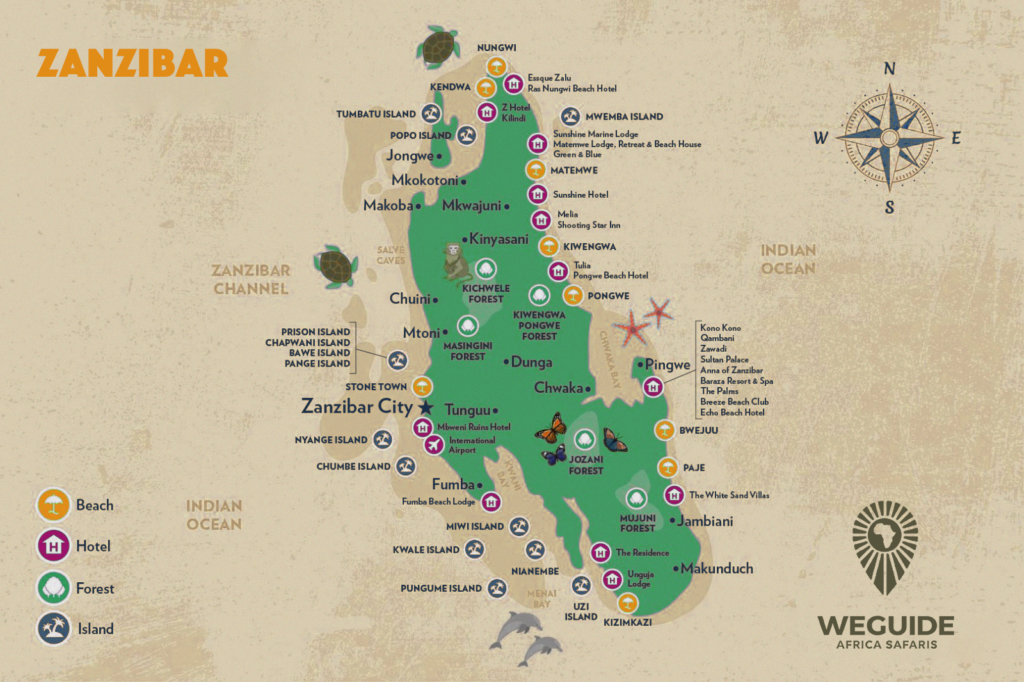
Consequently, this strategic location explains Zanzibar’s historical importance. Arab, Persian, Indian, and European merchants all sailed through these waters. As a result, they left behind a rich cultural legacy that is still visible today.
Yes, Zanzibar’s is officially part of Tanzania. However, it holds a very special political status that makes it different from a typical region.
Specifically, Zanzibar’s is a semi-autonomous region within the United Republic of Tanzania. Therefore, it has its own government and its own president. Moreover, it enjoys considerable self-governance over internal matters.
That said, it remains part of Tanzania for international affairs, defence, and foreign policy.
Zanzibar’s was once an independent Sultanate. In fact, it was one of the most powerful in the region, controlling Indian Ocean trade routes and much of the East African coast.
In 1963, Zanzibar’s gained independence from British rule as the Sultanate of Zanzibar. However, just one year later, a revolution overthrew the Arab Sultanate.
As a result of that revolution, Zanzibar merged with mainland Tanganyika in 1964 to form the United Republic of Tanzania. Nevertheless, Zanzibar retained significant autonomy.
Consequently, many Zanzibaris take great pride in this distinct identity today.
| Important to Know: When visiting Zanzibar, you may notice that it feels culturally distinct from mainland Tanzania. The blend of Arab, African, Indian, and European influences gives Zanzibar a unique identity found nowhere else on Earth. |
When most people say ‘Zanzibar Island,’ they are referring to Unguja. That is the main and largest island of the Zanzibar Archipelago.
However, Zanzibar as a whole is made up of several islands and islets. Two main islands form the heart of the region.
Unguja is the principal island and home to Zanzibar City, the region’s capital. It measures approximately 85 kilometres in length and 30 kilometres in width.
Furthermore, Unguja is where you will find Stone Town, a UNESCO World Heritage Site. It also hosts the famous beaches of Nungwi and Paje, along with spice farms and most of the archipelago’s tourism infrastructure.
Pemba Island lies about 80 kilometres north of Unguja. It is far less visited, which makes it a paradise for travellers seeking a remote, authentic experience.
In addition, Pemba is known for its lush rainforest interior and exceptional diving. Local communities there still practise traditional dhow-building. For this reason, people sometimes call it the ‘Green Island’ due to its fertile landscape.
The archipelago also includes several smaller islets. For example, Mnemba Island is famous for its exclusive eco-resort and world-class snorkelling.
Moreover, Chumbe Island is a protected marine sanctuary. Prison Island, on the other hand, is home to giant Aldabra tortoises and is a popular day-trip destination.
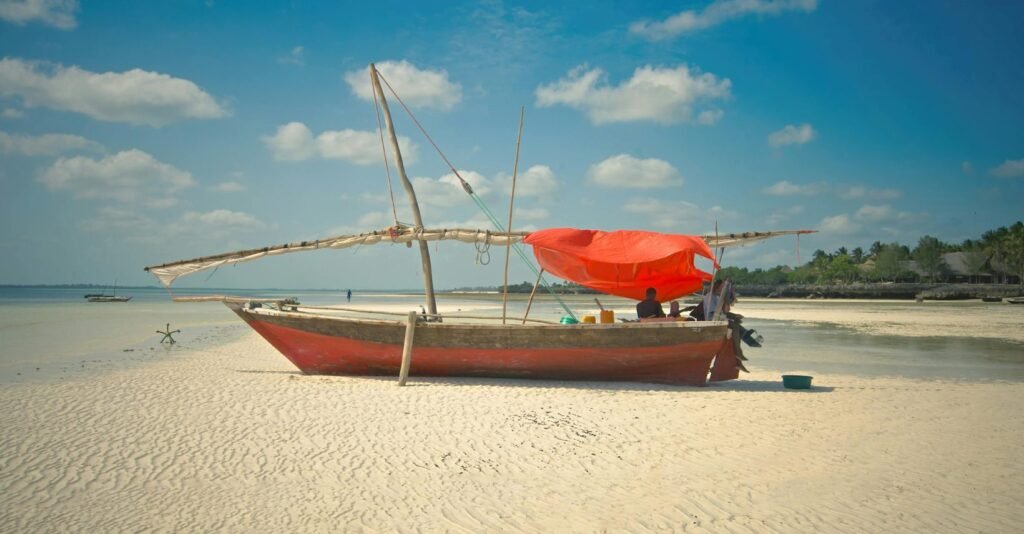
Zanzibar’s fame stretches far beyond its geography. It captures the imagination because it blends natural beauty, deep history, and vibrant culture in one place.
Above all, Zanzibar is home to some of the world’s most beautiful beaches. The powdery white sand and crystal-clear waters of Nungwi, Kendwa, and Paje draw visitors from every corner of the globe.
Additionally, the warm Indian Ocean is ideal for swimming, snorkelling, and kitesurfing. Consequently, beach lovers consistently rank Zanzibar among Africa’s top coastal destinations.
At the heart of Zanzibar City lies Stone Town, a UNESCO World Heritage Site. It has been described as a living museum of Swahili, Arab, Indian, and European cultures.
Its narrow alleyways, ornate wooden doors, and ancient mosques tell the story of a remarkable place. In addition, Stone Town was once the centre of the East African slave trade and a global spice market hub.
Notably, Stone Town is also the birthplace of Freddie Mercury, the legendary frontman of Queen. This fact adds yet another layer to Zanzibar’s global cultural significance.
Zanzibar earned the nickname ‘The Spice Island’ for good reason. Historically, it was a major producer and exporter of cloves, nutmeg, cinnamon, black pepper, and vanilla.
Today, spice farm tours remain among the island’s most popular activities. As a result, visitors get to see, smell, and taste the aromatic crops that made Zanzibar world-famous.
The waters surrounding Zanzibar’s are teeming with marine life. Coral reefs, sea turtles, dolphins, and whale sharks make these some of East Africa’s best diving waters.
Furthermore, Mnemba Atoll is widely regarded as one of the top dive sites on the entire continent. Therefore, scuba divers and snorkellers travel from across the world to explore it.
The culture of Zanzibar’s is a unique blend of African, Arab, Indian, and Portuguese influences. This mix is expressed through architecture, music, language, and food.
In particular, Zanzibari’s cuisine is a sensory adventure. It features fragrant biryanis, freshly caught seafood, and spiced curries. Moreover, the night food market at Forodhani Gardens in Stone Town is an essential experience for every visitor.
Reaching Zanzibar is easier than many travellers expect. Good flight and ferry connections are available throughout the year.
Zanzibar has its own international airport: Abeid Amani Karume International Airport (ZNZ). It is located just a few kilometres outside of Zanzibar City.
The airport receives direct flights from several major African hubs. For example, you can fly directly from Nairobi, Johannesburg, Addis Ababa, and Dar es Salaam.
Alternatively, you can take a ferry from Dar es Salaam. High-speed ferries run multiple times daily and take between 1.5 and 2 hours.
The journey offers beautiful views of the Indian Ocean coastline. As a result, it is a popular choice for travellers combining a mainland Tanzania safari with a Zanzibar beach holiday.
Most nationalities can obtain a visa on arrival at Zanzibar’s airport or seaport. Alternatively, you can purchase an e-visa before travelling.
Since Zanzibar’s is part of Tanzania, a standard Tanzanian visa grants entry to both the mainland and the island. However, always check the latest visa requirements for your specific nationality before you travel.
| Travel Tip: The best time to visit Zanzibar is during the dry seasons — from June to October or from December to February. The long rains fall from March to May, and shorter rains arrive in November. Plan accordingly for the best beach weather. |
So, where is Zanzibar? In summary, it is an archipelago in the Indian Ocean, just off the east coast of Africa. It forms a semi-autonomous part of Tanzania.
Moreover, it is a place where history, culture, and natural beauty collide spectacularly. As a result, Zanzibar’s is one of the most unforgettable destinations on the African continent.
Whether you are drawn by pristine beaches, the winding streets of Stone Town, or the scent of cloves drifting on the ocean breeze, Zanzibar will leave a lasting impression.
Now that you know exactly where Zanzibar is located, perhaps only one question remains: when are you going?